

 About
About Links
Links


[Updates with more context!]
What happens inside the brain of a Go player when they make a mistake?
Go is one of the most complex strategy games in the world: a single move can decide the outcome of an entire game. But what goes on inside of a player's mind during those critical moments? How does the brain process errors, pressure, and high-stakes decisions in real time?
This is exactly what "Play with Brain" sets out to explore.
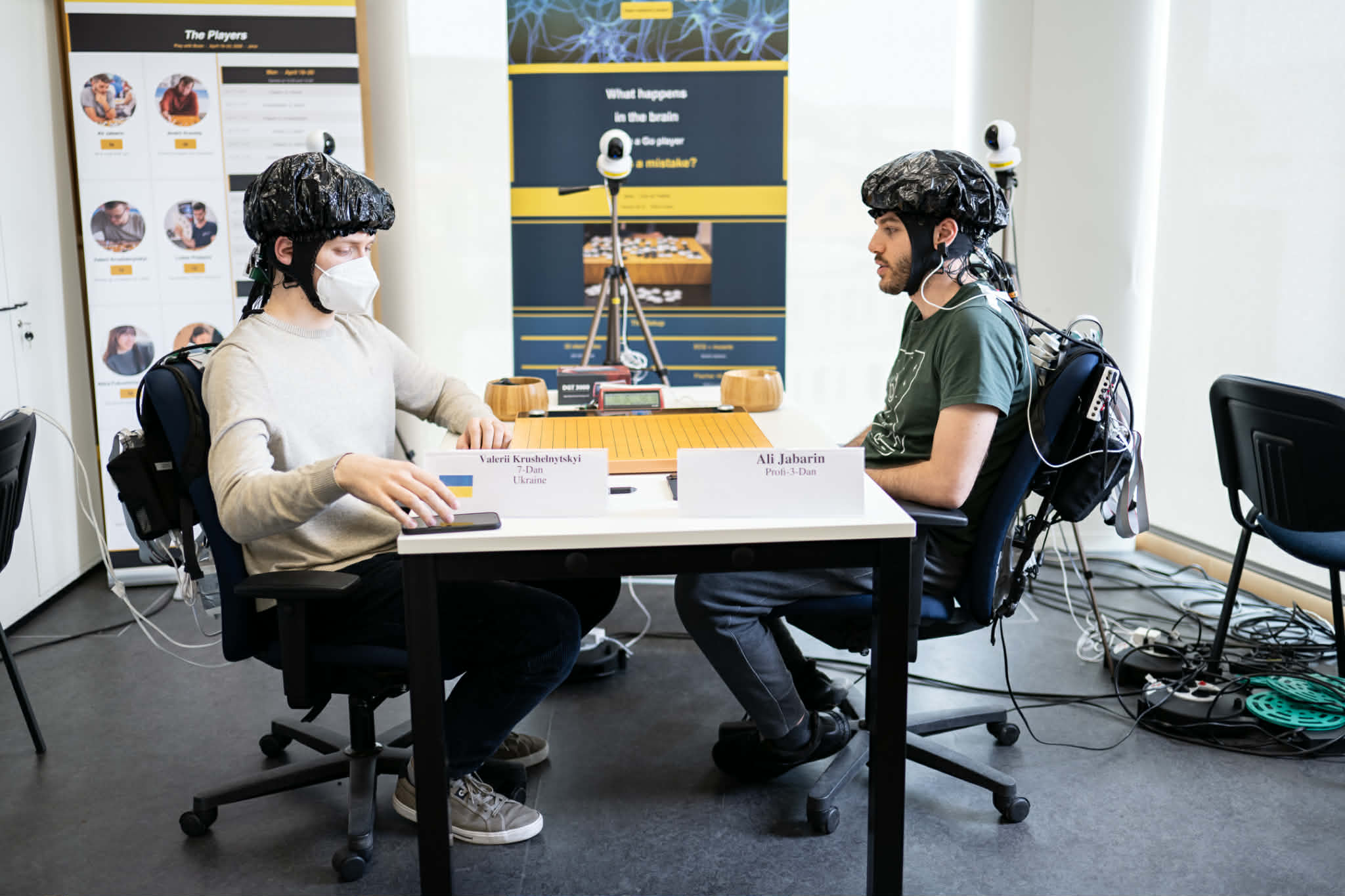
From April 18 to 23, international professional and amateur Go players will compete in a set of serious games in Jena, Germany, while their brain activity, heart rate, and muscle tension will be simultaneously monitored.
The result: a unique window into the neuroscience of expert decision-making, live and in action.
The matches will be broadcast and reviewed live on Twitch by Stephen Hu 6d and a Psychologist.
You'll find below the key information.
Follow on Twitch
The Team
The project brings together researchers and the Go community.The scientific side is led by Prof. Ilona Croy and PhD students Vanessa Noering and Tim Jesgarzewsky, supported by two student assistants who handle the technical setup.
From the Go community: Manja Marz (project coordination and co-lead of the experiment), Jörg Sonnenberger (boards), and Tom Eulenfeld (data analysis).
A live commentary team — Go players (Stephen Hu 6d, Valerii Krushelnytskyi 7d, Andrii Kravets 3p, Manja Marz 4d) paired with psychologists-researchers — will provide real-time insight during the livestream.
The Players
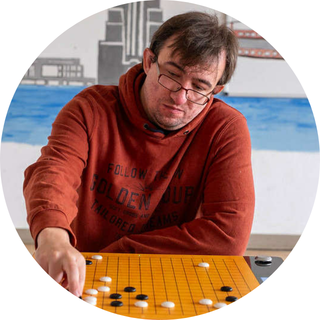
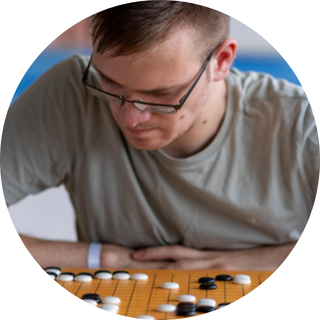
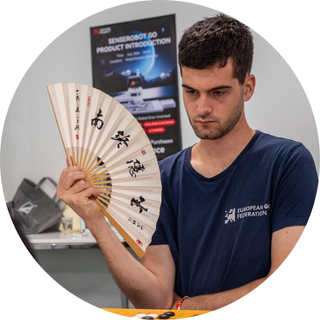
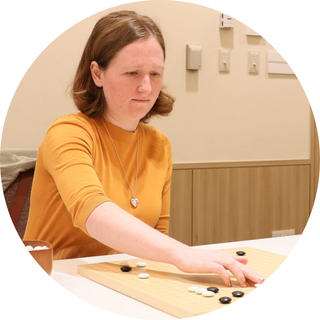
Several professional and amateur players will join the experiment. 4 men and 4 women.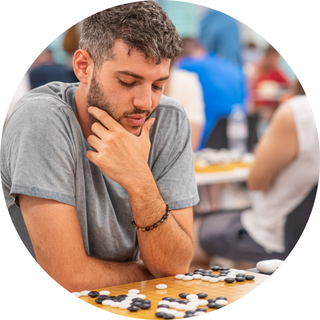



The Setup & Games
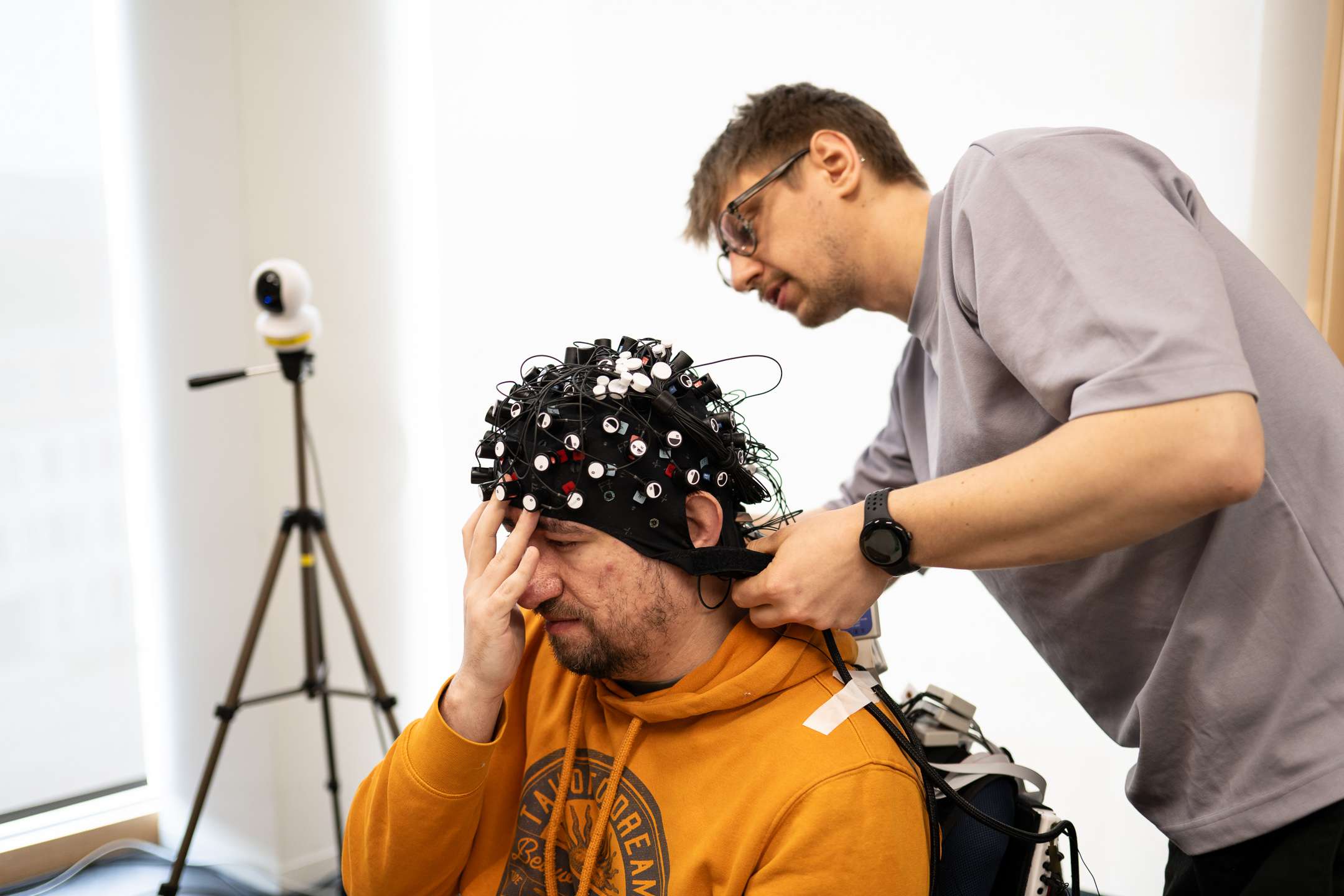
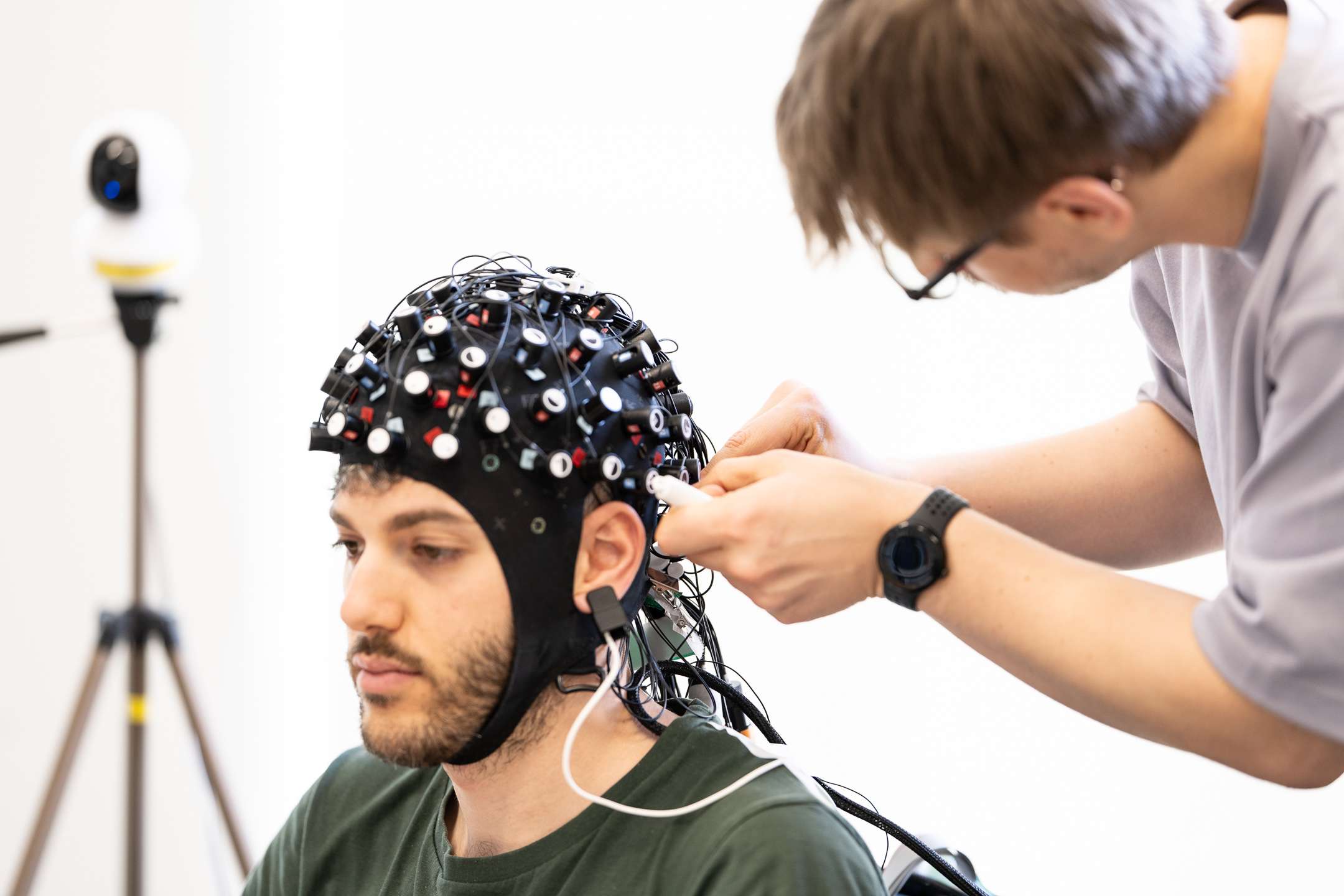
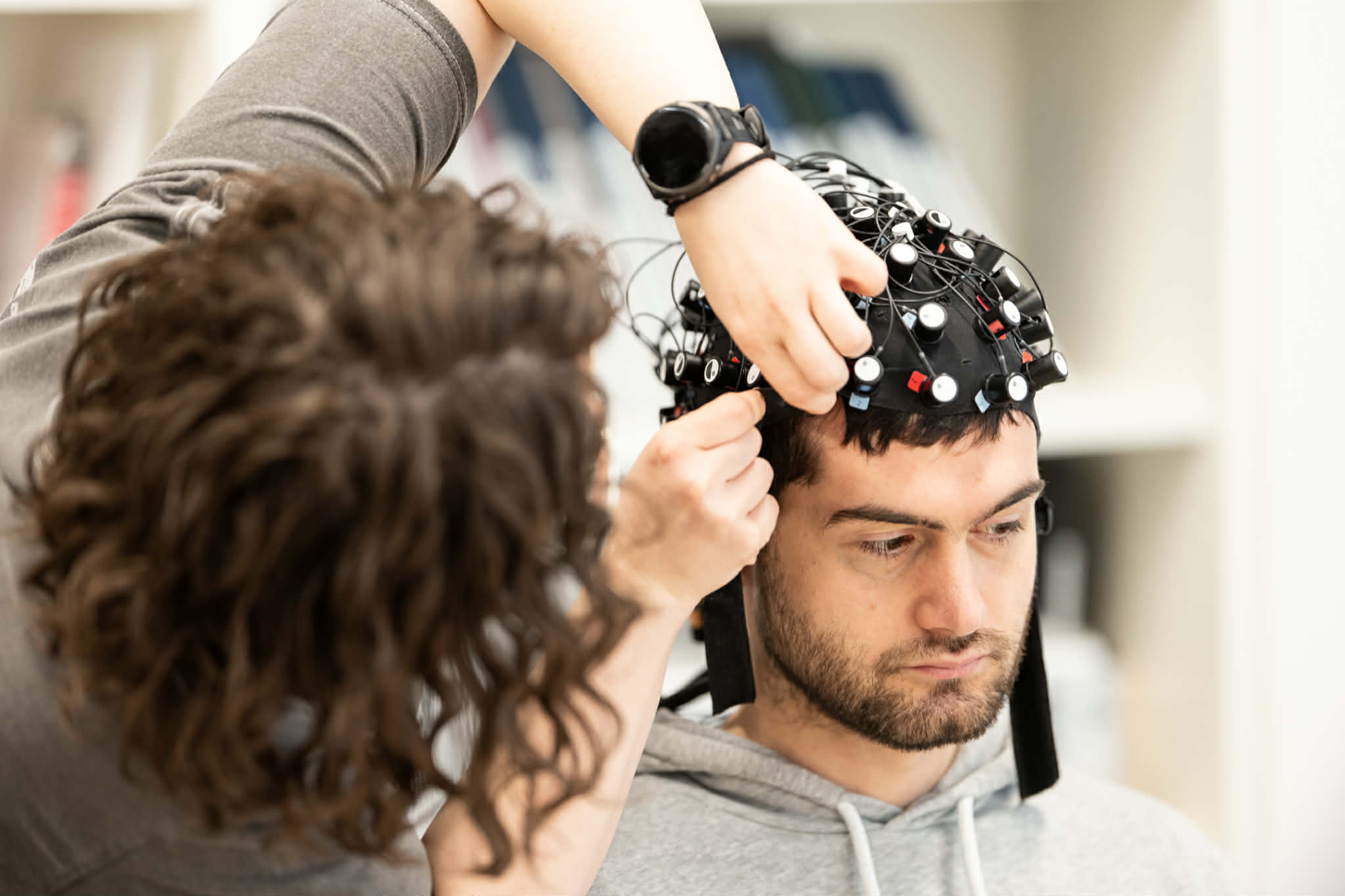
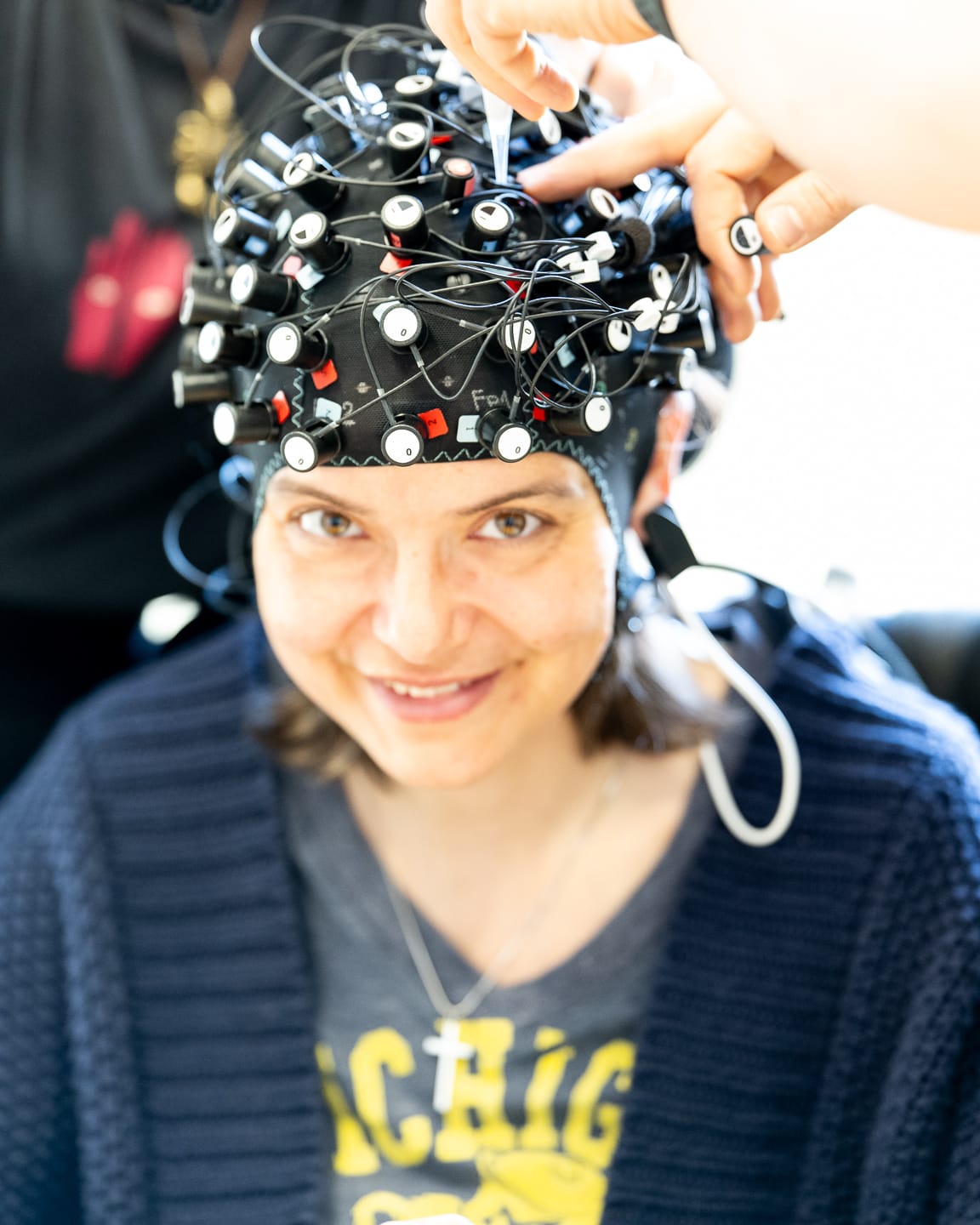
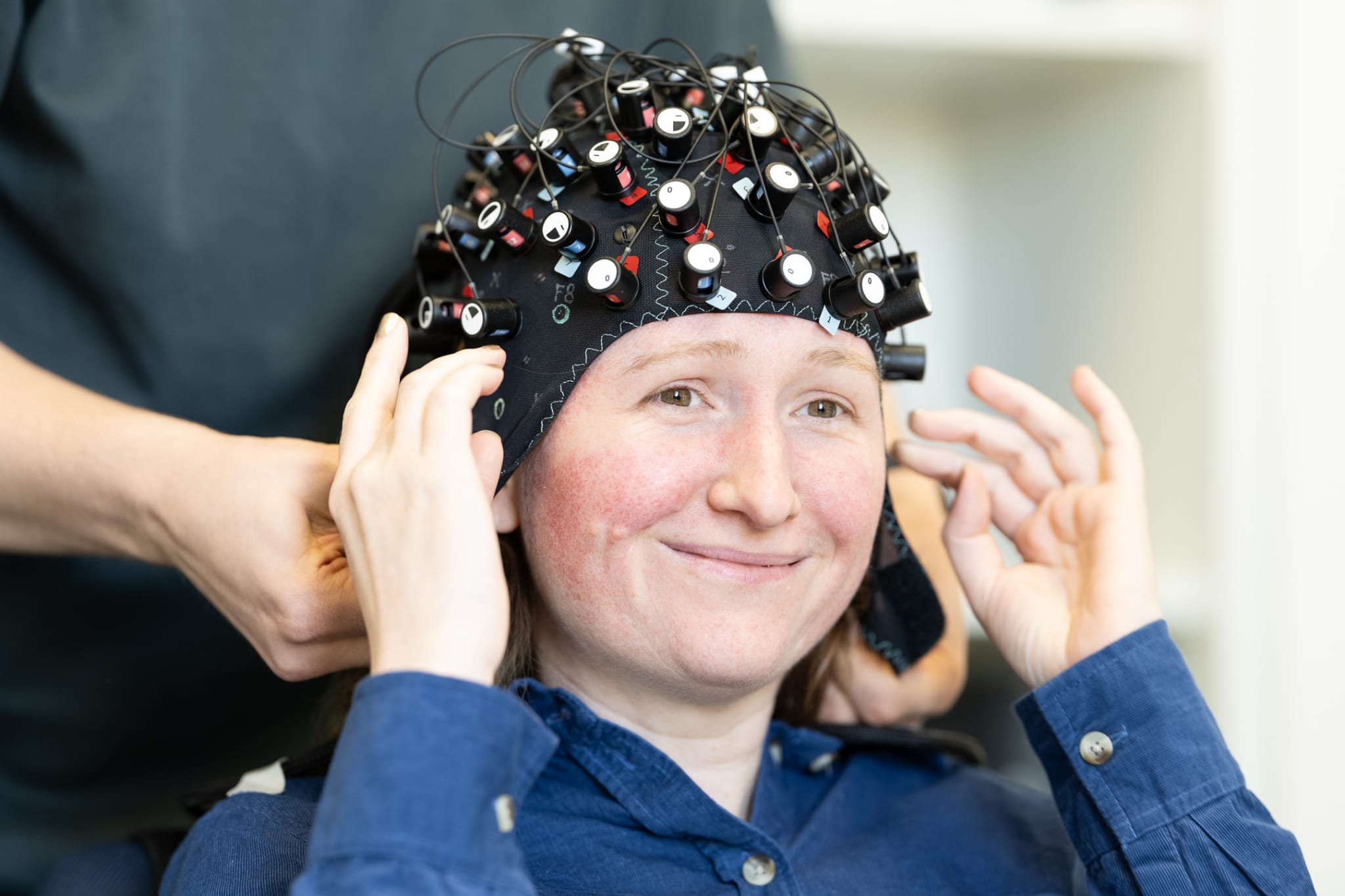
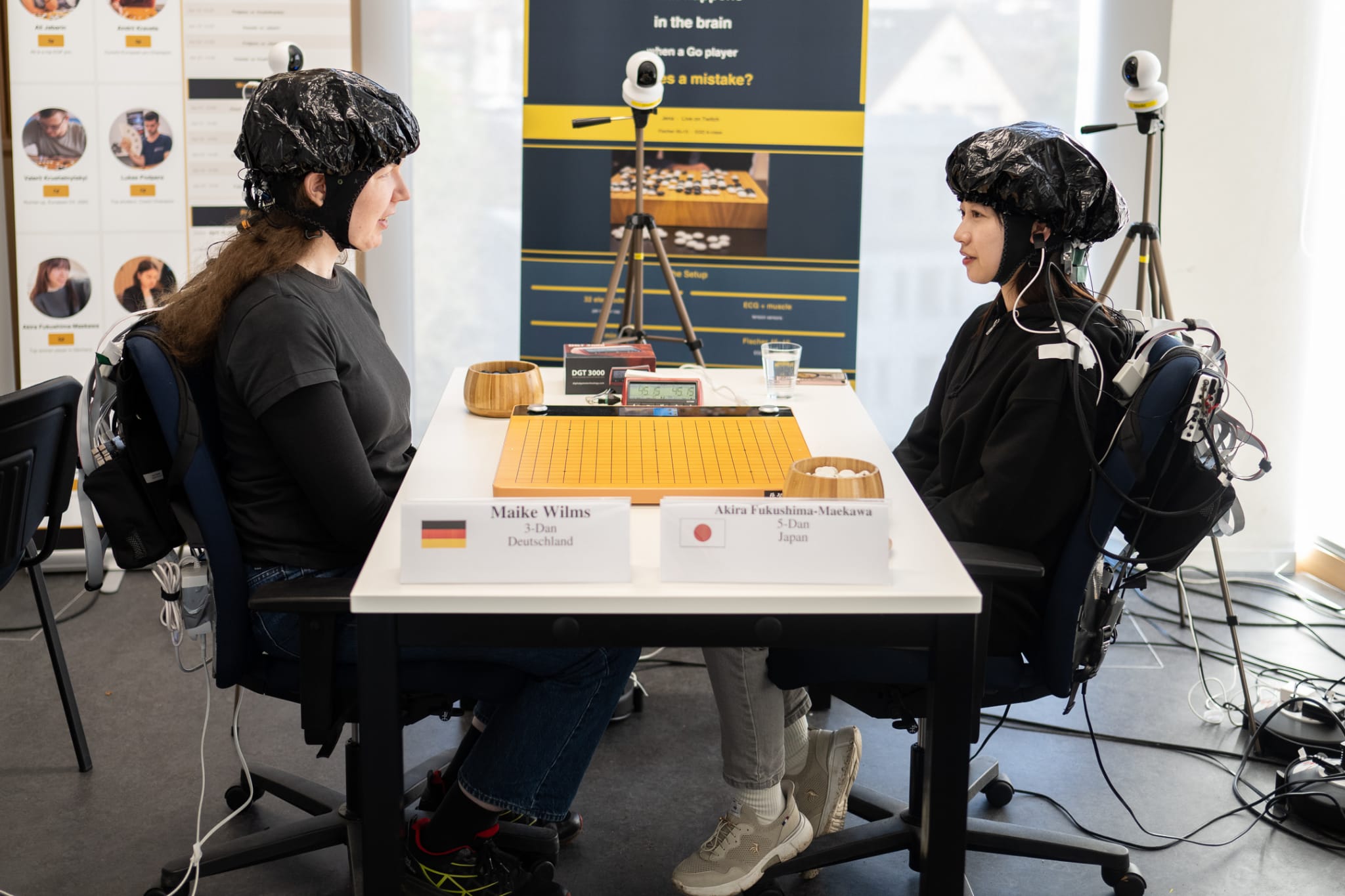
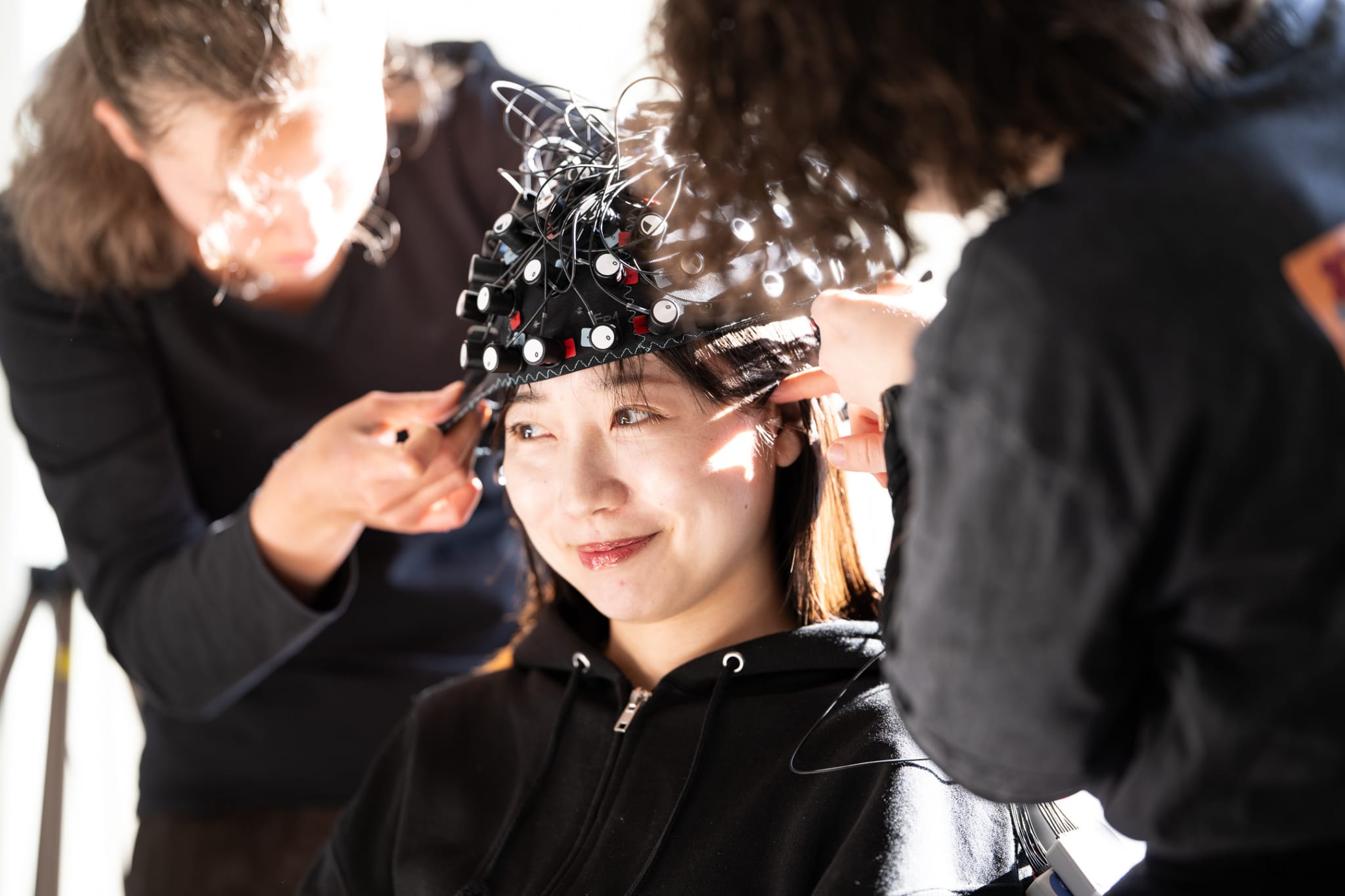
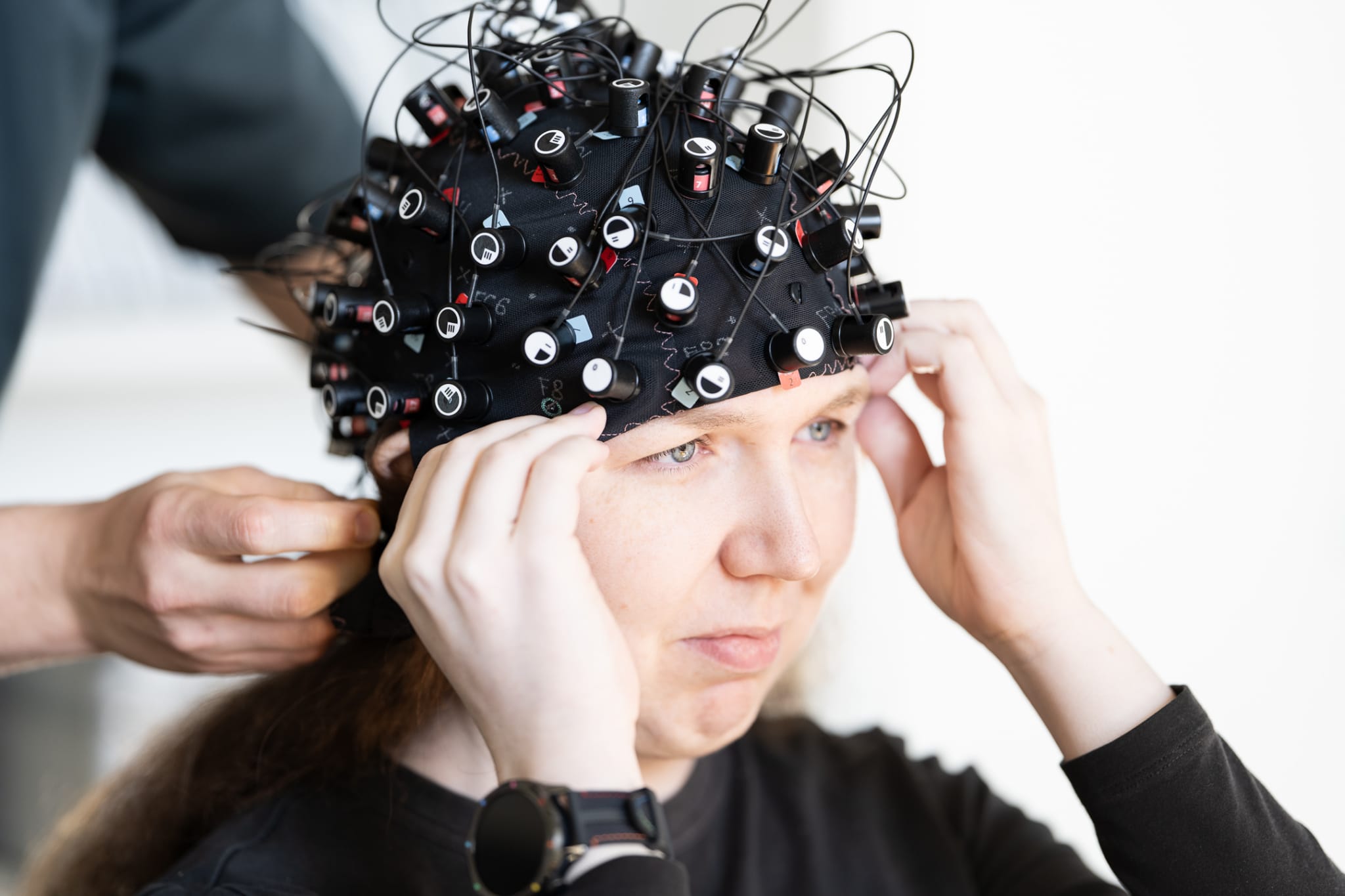
Each player is equipped with a sensor cap containing 32 electrodes that wirelessly sync with the Go boards, capturing brain activity throughout the game. Additionally, players wear an ECG monitor (three sensors on the chest) and a muscle tension sensor on the shoulder. 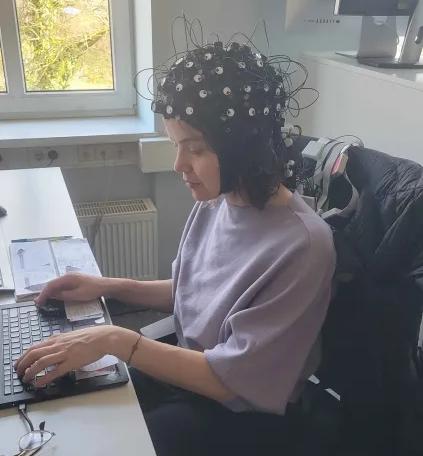
Setting everything up takes about 60 minutes, so players arrive one hour before their game begins.
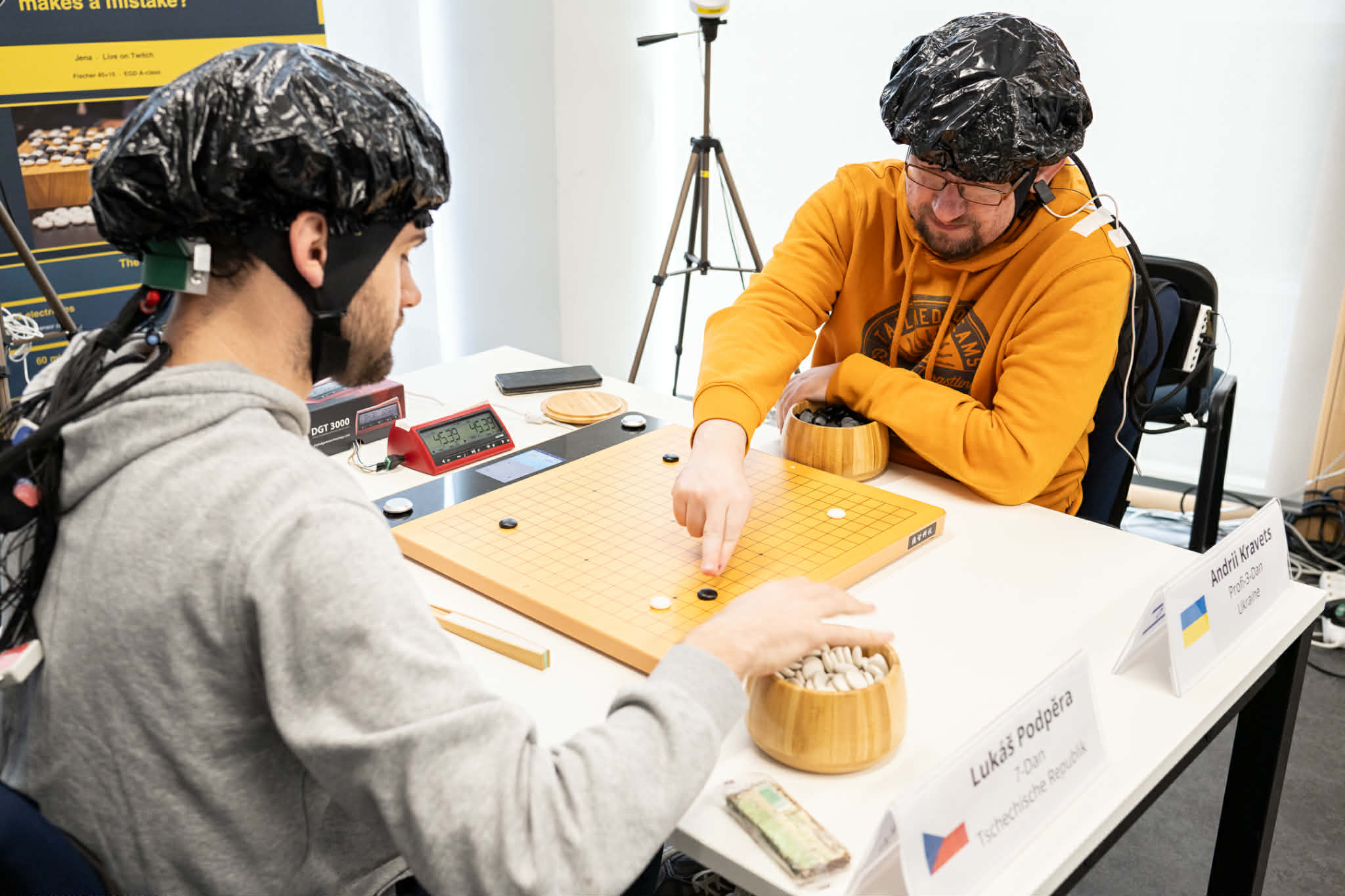
Two games take place each day — one in the morning, one in the afternoon. Each game uses a Fischer time setting of 45 minutes + 15 seconds, qualifying the event as an EGD A-class tournament. Games are played one at a time, not in parallel.
After each game, the two players are separated and independently asked to review and comment on their game. This session is video recorded. Players also fill in a questionnaire.
Schedule
The schedule is like this:
Men – 18–20 April
Time slots in CEST
Women – 21–23 April
Time slots in CEST
How to follow?
The games will be streamed live on Twitch. Stephen Hu 6d and a psychologist will comment together — the psychologist reacting to the live brain data in real time, offering insights into a player's emotional state, focus, or fatigue, even without knowledge of Go.Follow on Twitch
Understanding the experiment
To better understand what's going on, we gathered here a few comments and hints from the scientific team.
First of all, let's look quickly how the brain works, and which area are often connected to what.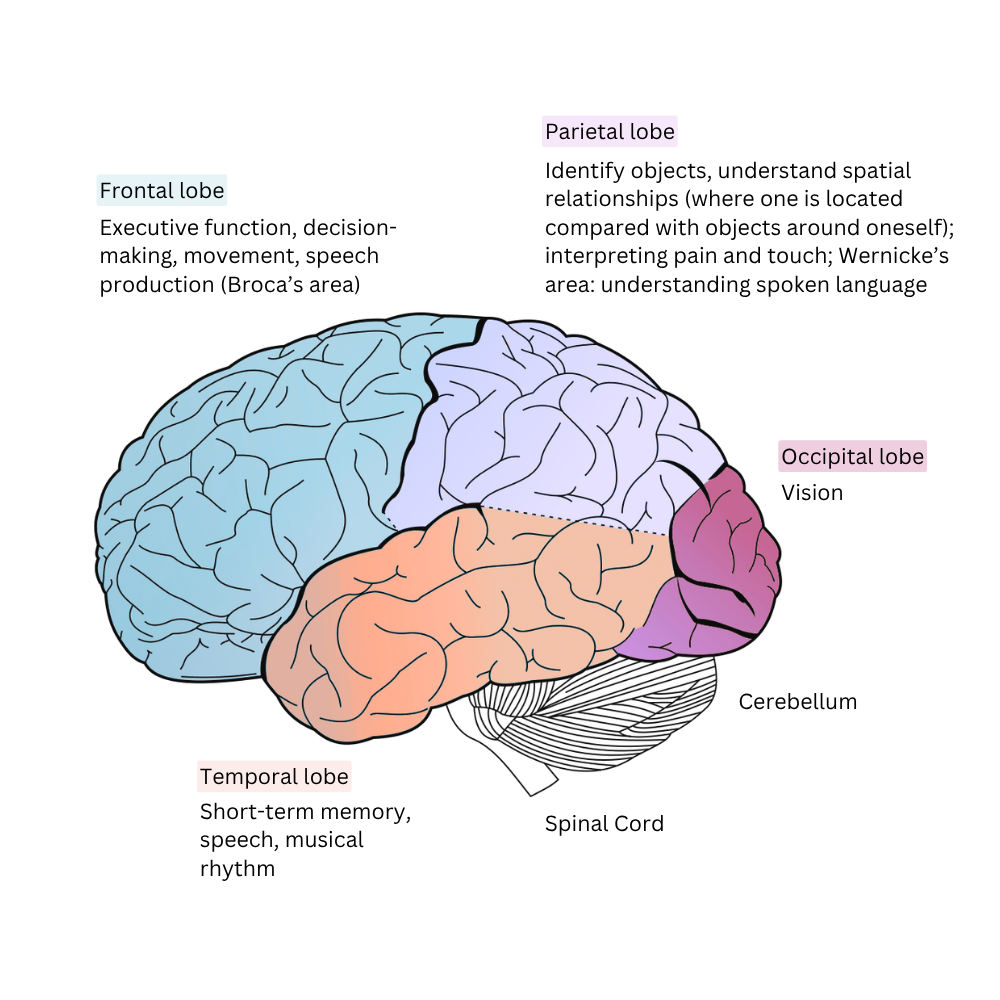
What were the research questions at first?
- Broad Scale: How does the brain activity changes across the entire game in general? Could a sustained activity in brain areas relate to the outcome of the game or differences between male and female players?
- Initial Conclusions: To examine broad scale questions we have to compare the beginning of the game to the mid and late game. This is difficult during the live game, therefore we have to wait for the analysis to draw first conclusions.
- Small scale: How does the brain activity differ during the turn of a player compared to the turn of their opponent? How does the brain activity change when the player is ahead versus behind
- Initial Conclusions: In the last few days it appeared that the beginning of a player’s turn was generally associated with an increase in activity and that especially high-pressure situations increased blood oxygenation across the entire brain.
As this is our first study in the Go and Brain project, one of our initial goals is to assess the feasibility of our experimental setup and to examine how we can collect the data we are interested in without disturbing the game of the players.
Our initial aim is to get a first understanding of the neural processes underlying the player’s choices and emotions and perhaps plan a broader follow-up study guided by these preliminary directions. Such a wider study would include many more participants which makes any possible findings more robust for us to interpret and draw conclusions from.
How do we "see" the brains of the players?
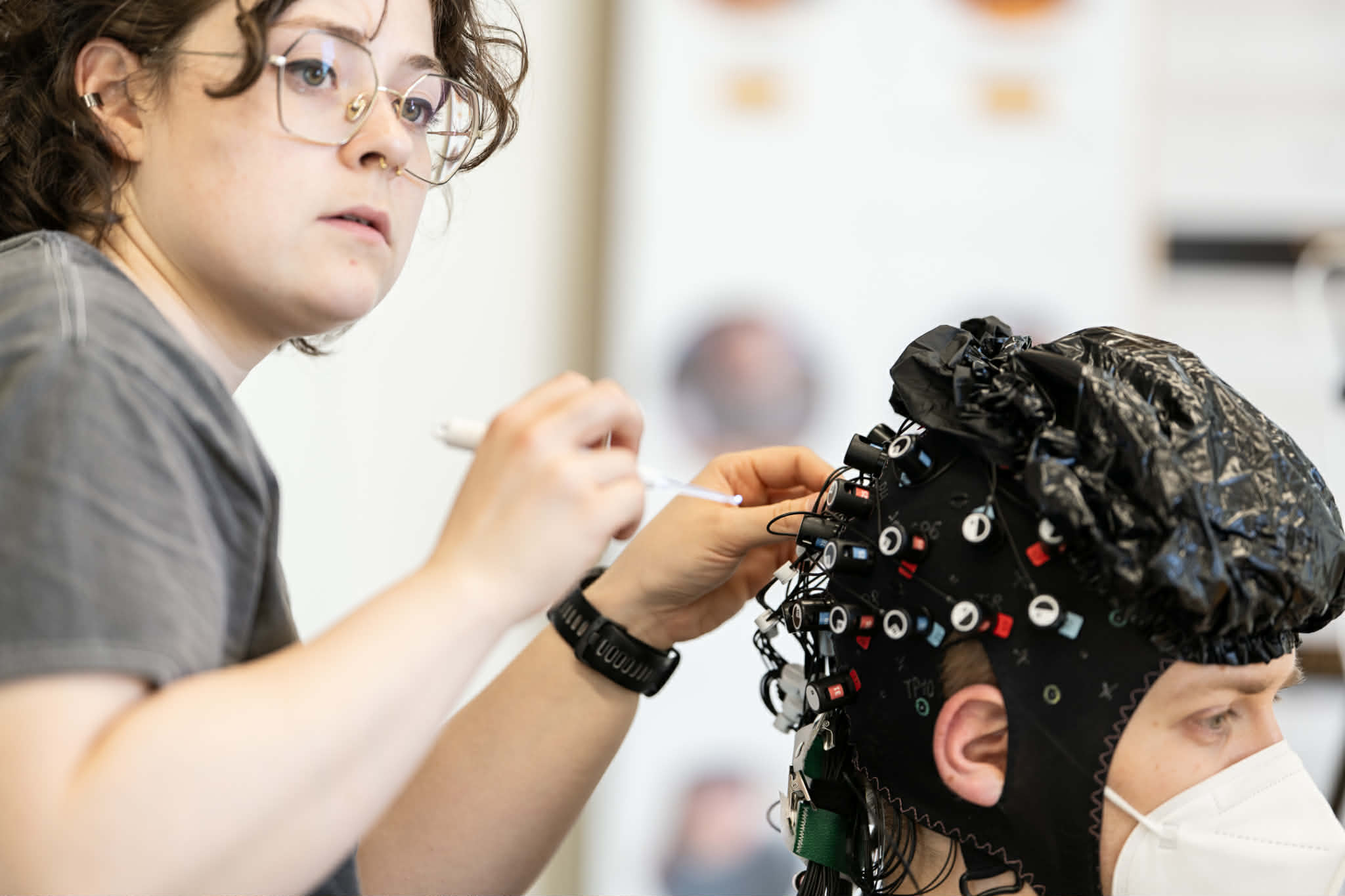
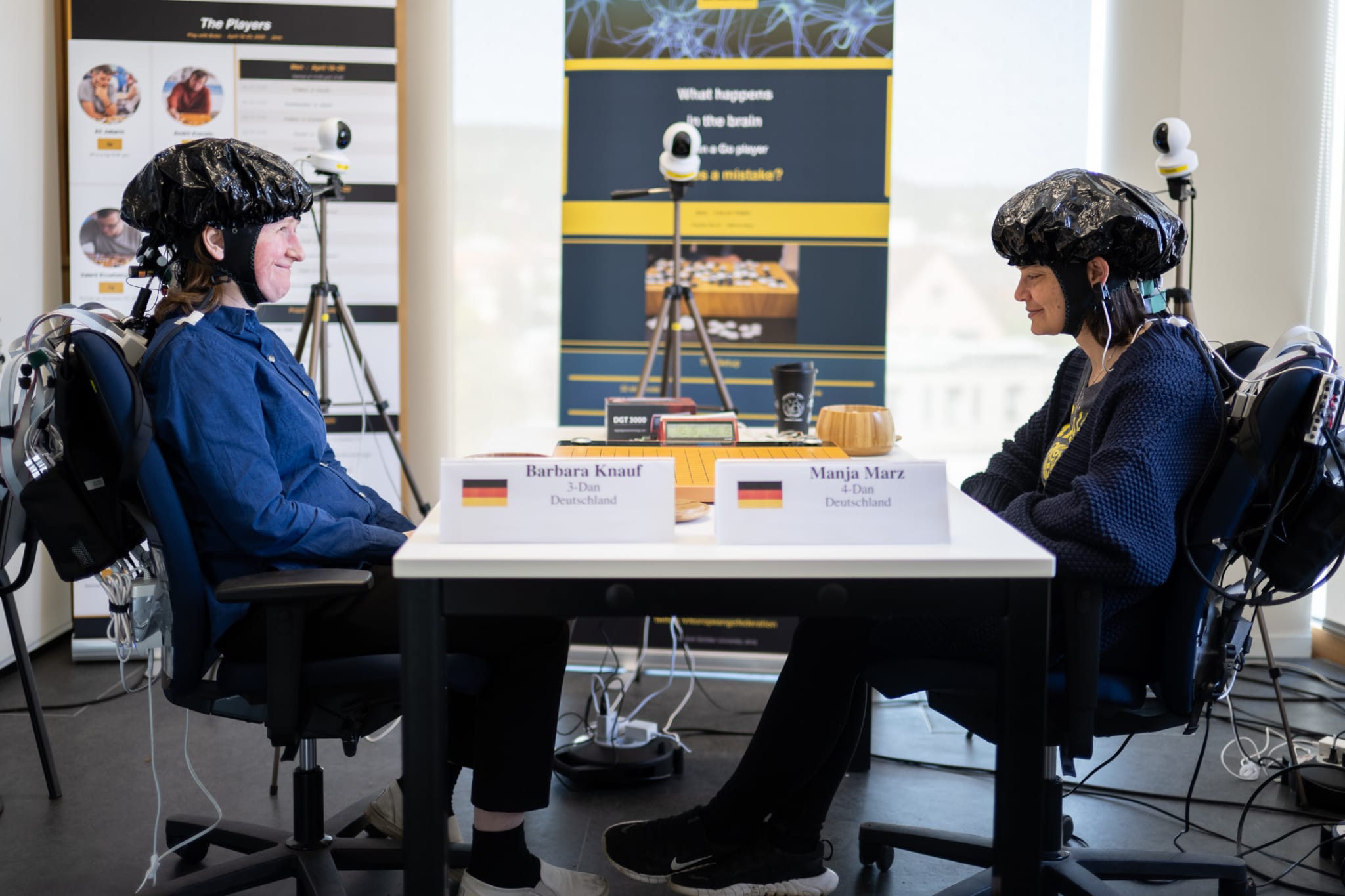
As you may have noticed during the streams, the players wear special equipments. One of them is that "funny hat", which is actually using fNIRS (functional near-infrared spectroscopy) technology, a brain imaging method using harmless light to measure changes in blood oxygenation in the brain (this is why the players have it covered by a black kind of shower hat, to stop external light from disturbing).
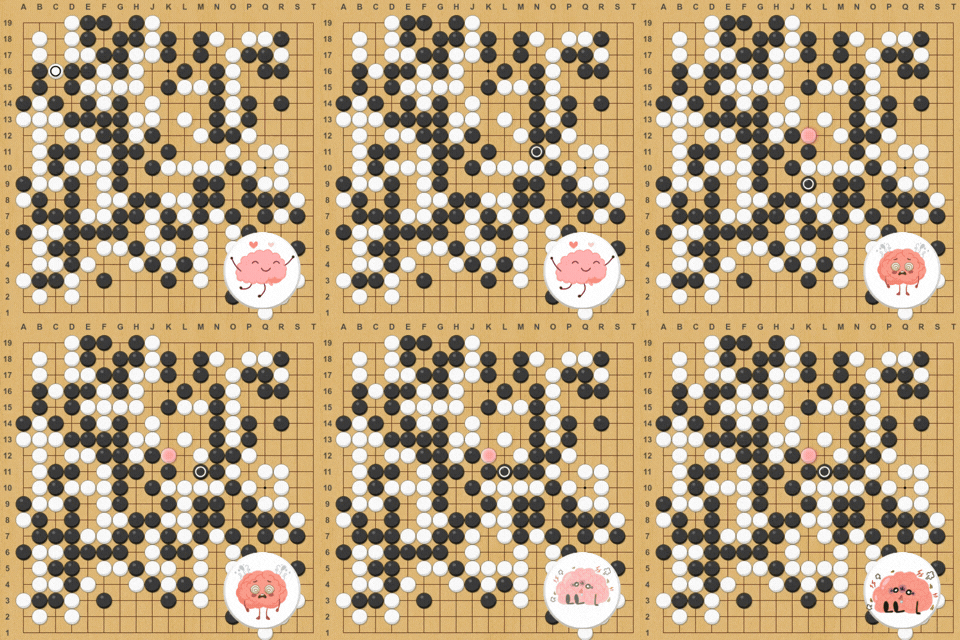
Green, Yellow, Red - what does it mean?
When a brain region becomes more active, it uses more oxygen.
The body responds by sending more oxygen-rich blood there. fNIRS detects this by measuring:
• HbO (oxygenated blood) → usually increases with activity
• HbR (deoxygenated blood) → usually decreases with activity
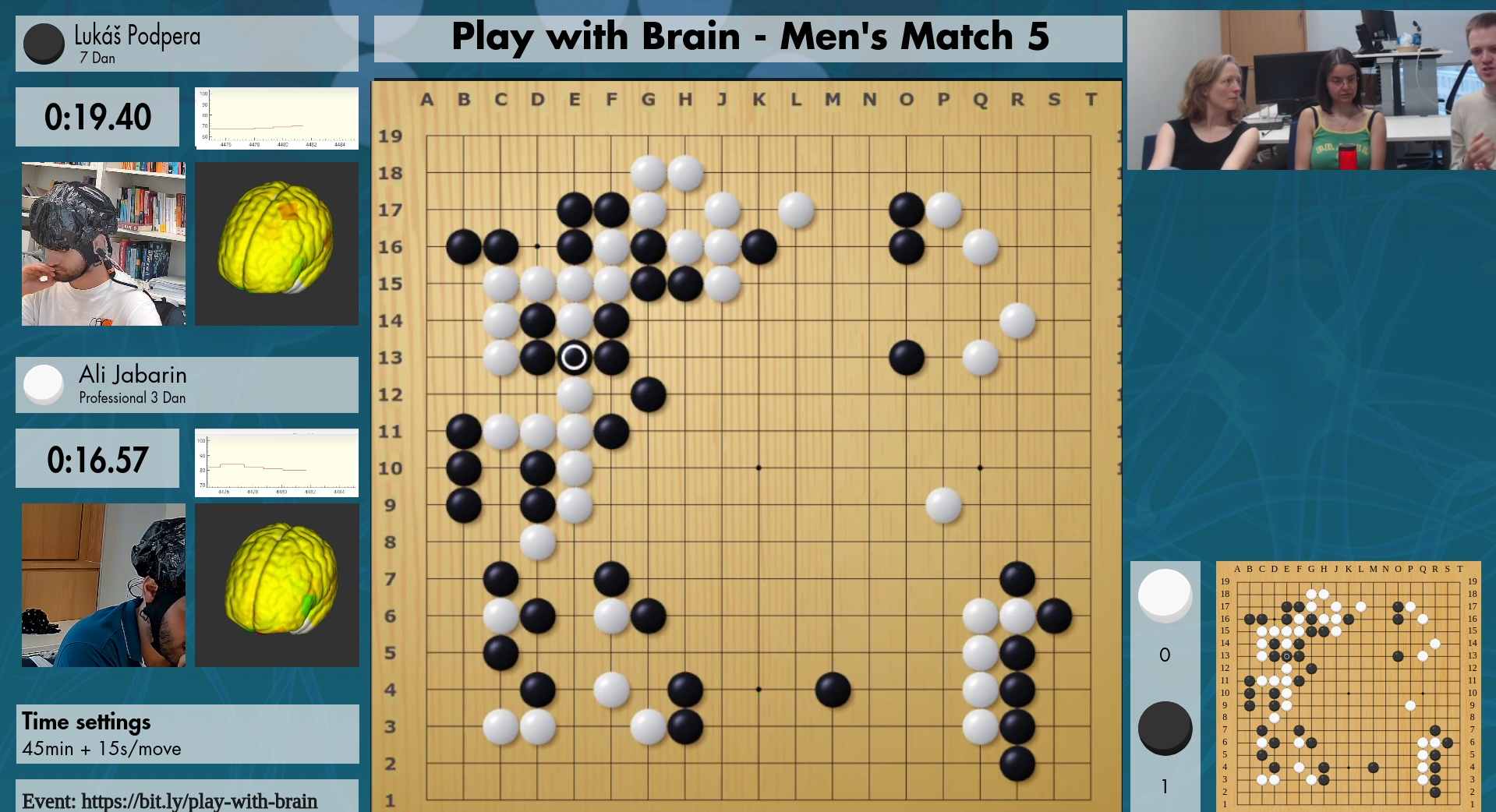
The colors you see on the stream reflect this:
Red = Increase in oxygenated blood (HbO increase) → possible increase in brain activity
Yellow = No major change
Green = Decrease in oxygenated blood (HbO decrease)
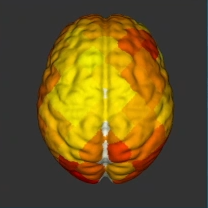
Of course, it is a bit tricky (and that's why science is wonderful!) and very important: “More red” does not mean “better thinking”, “more intelligent”, or “more effort”, simply, those parts of the brain seem more solicited.
“Green” does not mean something is wrong or “less thinking”. These are relative changes compared to a baseline, not absolute measures.
We are not measuring thoughts directly, only these indirect physiological changes.
What you see on the screen are moment-to-moment changes in brain blood oxygenation.
These fluctuations show that the brain is active, but they do not tell us what exactly someone is thinking or feeling.
If you see changes (more red or green), it means something in the brain is changing, but interpreting what that means requires careful scientific analysis afterward.
To avoid misunderstandings: this livestream shows raw physiological signals, not interpreted brain activity. Any meaningful conclusions can only be drawn after the study is completed and analyzed.
Whyyyyy?
Indeed, we cannot interpret the live data directly.
Even though it is tempting, you cannot look at the screen and say what someone is thinking or doing mentally. There are several reasons for this:
• Brain regions are multifunctional: The same area can be involved in attention, memory, decision-making, emotion, and more
• There is a delay (around 5–8 seconds): Blood flow changes lag behind actual neural activity
• The signal is influenced by many factors
• Movement, speech, breathing, and posture can all affect the data
• Meaning only emerges after analysis: We need many participants, controlled comparisons, and statistical models
So in the livestream, what you see is raw data, not conclusions, and that's why we discuss it live cautiously, so we can understand a little what is going on, make hypothesis and have hints from Go players to also contextualize a change.
How is the experiment going so far?
The experiment is running smoothly, and we are successfully recording brain activity during real gameplay. At this stage, we are collecting data rather than drawing conclusions. We will only be able to draw meaningful conclusions after analyzing the full dataset.
Can we already say something like “Go players use the right brain more”?
Short answer: No!
Longer version: It is a common idea that certain types of thinking happen more in the “left” or “right” brain, but real brain activity is much more distributed and complex. With fNIRS, especially in a live setting, we cannot make claims like “this player is using visualization” or “this side is more active” in a meaningful way. We’ve seen, however, a few interesting patterns in the last few days: To the end of the game we’ve seen more phases of whole brain activity which appear to be even more pronounced when the remaining time of a player is low. Thus, these patterns may relate to the high cognitive demand of end game situation further influenced by increased stress due to time pressure.
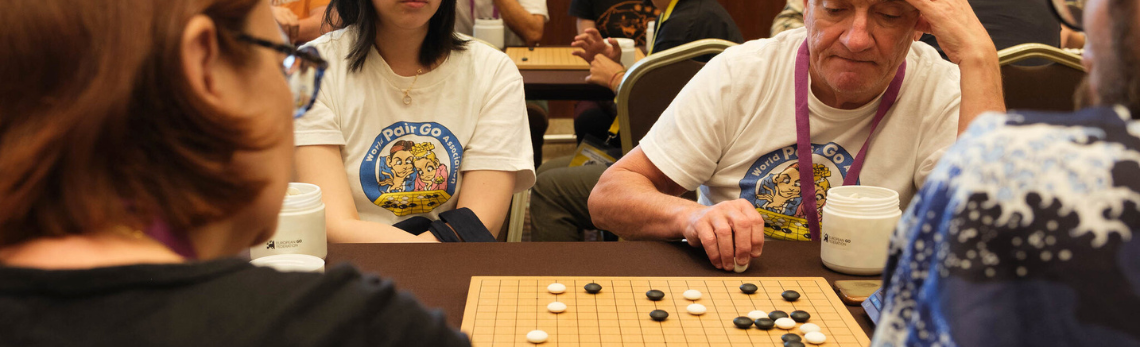
Some more photos by Alexander Kiel
.png)
.png)